
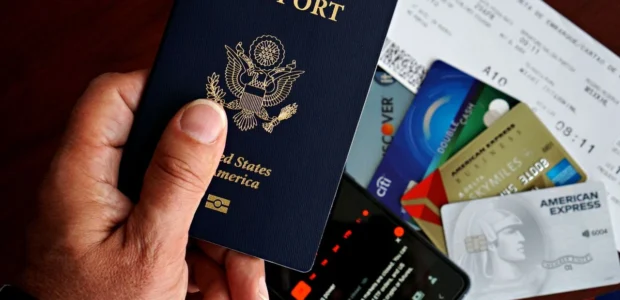

Booking a flight almost always feels like a gamble. You check prices one day, come back the next,
and somehow the same seat costs $80 more. Meanwhile, you’ve got a stash of credit card points
sitting in your account and you keep hearing that “stacking” points with promo codes can knock a
serious chunk off your fare. But how does that actually work and does it really save as much as
people claim?
This guide breaks down exactly how credit card points and airline promo codes interact, what you
can realistically combine, and the mistakes that quietly cost travelers money every year. By the
end, you’ll have a clear, honest framework for squeezing more value out of every flight you book
without falling for the too-good-to-be-true codes that circulate online.
Understanding The Basics: Points vs. Promo Codes
Before you can stack anything, it helps to understand that credit card points and airline promo
codes are two completely different discount mechanisms and that distinction matters more
than most articles let on.
Credit Card Points are a currency you’ve already earned through spending, sign-up bonuses, or
card rewards programs. You redeem them either by transferring them to an airline’s frequent
flyer program, using them through your card issuer’s travel portal, or applying them as a
statement credit against a travel purchase.
Airline Promo Codes, on the other hand, are discount codes issued directly by an airline (or
occasionally a third-party booking site) that reduce the cash price of a ticket at checkout. They’re
typically tied to specific promotions a seasonal sale, a new route launch, a loyalty program
milestone, or a partnership campaign.
The key thing to understand: these two systems don’t always talk to each other. Whether you can
combine them depends entirely on how you’re paying and which portion of the transaction the
promo code applies to.
How Stacking Actually Works
There are generally three realistic ways travelers combine points and promo codes, and
understanding which one applies to your situation will save you a lot of frustratio
1. Promo Code On a Cash Booking, Points as a Statement Credit
This is the most common and most reliable method. You book directly with the airline using
a valid promo code to reduce the cash price. Then, separately, you use your credit card’s travel
redemption feature (many premium travel cards let you “erase” travel purchases with points) to
offset some or all of what you paid.
In this scenario, the promo code and the points redemption never actually interact with each
other. You’re simply applying two separate discounts to the same purchase, one at checkout and
one after the fact.
2. Points-Plus-Cash Bookings
Some airlines and card-linked travel portals allow you to pay for a ticket using a combination of
miles and cash. If the airline is also running a promo code for cash portions of bookings, it may
apply only to the cash component of a points-plus-cash ticket — not the miles portion. This varies
significantly by airline, so it’s worth checking the fine print before assuming a code will apply.
3. Transferring Points To Book An Award Ticket
Award tickets (booked entirely with miles through an airline’s loyalty program) generally do not
accept promotional discount codes, because you’re not making a cash purchase in the traditional
sense you’re redeeming a benefit. If you transfer credit card points to an airline partner and
book an award seat, don’t expect a promo code to reduce anything further.
Step-by-Step Guide To Stacking Points & Promo Codes
Here’s a practical sequence to follow when you’re trying to maximize savings on your next flight.
- Check Your Card’s Travel Portal First. Many premium cards (think travel rewards cards from
major banks) have their own booking portals with points-based pricing that occasionally beats
or matches airline fares. Compare this price against booking directly with the airline.
- Search For The Same Flight Directly On The Airline’s Website. Prices and fare rules can
differ between an airline’s own site and third-party portals, so always cross-check.
- Look For a Legitimate, Currently Active Promo Code. Check the airline’s official newsletter,
app notifications, or loyalty program communications — these are the most trustworthy
sources. Be skeptical of codes shared on random coupon aggregator sites (more on this
below).
- Apply The Promo Code at Checkout On a Cash Fare, if one is valid and applicable to your
route, dates, and fare class.
- Decide How To Use Your Points. If your card allows it, consider using points as a statement
credit against the discounted cash price rather than transferring them to the airline, since
transferred miles won’t stack with the promo code.
- Compare the Final Out Of Pocket Cost across all methods cash plus promo with pointscredit vs. straight award redemption before booking. Sometimes redeeming miles directly is
still the better deal, especially on routes with historically high cash fares.
- Screenshot Your Confirmation and The Terms Of The Promo Code in case of a pricing
dispute or if the fare needs to be adjusted later.
Important Tips and Strategies
- Read The Fare Class Restrictions. Many airline promo codes only apply to specific fare classes (often the cheapest, most restrictive ones), which may not be eligible for free changes or upgrades.
- Time your purchase around known sale periods. Airlines commonly run promotional pricing around slower travel seasons or as part of loyalty program anniversaries, though the specific dates and terms change every year and shouldn’t be assumed to repeat.
- Check if your credit card offers a travel portal bonus. Some cards offer extra points multipliers specifically for bookings made through their portal, which can be worth more longterm than a small percentage off a single ticket.
- Set fare alerts. Tools that track price history can help you tell whether a “discount” price is actually lower than what the route normally costs.
- Don’t ignore baggage and change fee differences. A cheaper fare with a promo code isn’ta win if it comes with restrictive baggage or change policies that end up costing more later.
- Call the airline if a code fails at checkout. Sometimes phone agents can manually applyeligible promotions that a buggy checkout flow won’t process.
Common Mistakes To Avoid
- Assuming all promo codes work on award tickets. As covered above, codes tied to cashpromotions typically won’t apply to miles-based bookings.
- Using unverified promo codes from coupon-aggregator websites. A large share of “flight promo codes” circulating on generic deal sites are expired, fake, or lifted from unrelated retail promotions. If a code isn’t listed on the airline’s official channels, treat it with caution.
- Forgetting to check expiration dates and blackout periods. Many codes exclude holidays, peak travel dates, or specific routes.
- Transferring points to an airline before confirming seat availability. Points transfers to airline partners are usually irreversible, so always verify the award seat exists before you move your points over.
- Not comparing the portal price to the airline’s direct price. Occasionally the “points price” through a bank’s travel portal is actually worse than paying cash with a promo code and redeeming points separately as a statement credit.
- Overlooking foreign transaction or booking fees that can eat into the value of a promo discount, particularly with certain third-party portals.
Practical Examples
The following are hypothetical scenarios meant to illustrate the mechanics of stacking not
guaranteed outcomes, real promotions, or specific pricing
Example 1: The statement-credit stack Imagine a traveler finds a $320 round-trip fare
directly on an airline’s website and applies a valid, currently active promotional code that reduces
the fare by $30, bringing it to $290. They then use their travel rewards credit card’s “erase travel
purchases” feature to redeem enough points to cover $100 of that $290 charge, bringing their
real out-of-pocket cost down further. The promo code and the points redemption never touched
the same discount they simply stacked sequentially.
Example 2: The points-vs-cash comparison Suppose the cash fare for a route is $450, but the
airline also allows a redemption of 25,000 miles plus $50 in taxes for the same seat. If a traveler
has a promo code that would only save $25 on the cash fare, redeeming miles instead might be
the better value depending on how much that traveler personally values each mile. This is why
comparing both paths before booking matters more than defaulting to whichever discount looks
flashiest.
Frequently Asked Questions
Do airlines actually offer promo codes, or is that mostly a myth? Airlines do run legitimate
promotional codes, but they’re less common and generally less generous than retail promo codes.
They typically appear during specific sales events, new route launches, or loyalty program
campaigns rather than being a constant, always-available discount.
Where can I find real, current airline promo codes? The safest sources are the airline’s own
website, official app, verified email newsletters, and loyalty program communications. Be
cautious with third-party “coupon” sites, since many list expired or fabricated codes that were
never valid for airline bookings.
Do flight prices really drop at a certain time of day, like 2 a.m.? There’s no verified,
universal rule that flight prices drop at a specific hour. Pricing is driven by demand, seat
availability, and algorithmic fare adjustments that change constantly — timing your search
around a specific hour is unlikely to produce reliable savings.
Do flight prices go down on certain days, like Tuesdays or Thursdays? This is a popular but
largely outdated myth. Historically, some fare sales were refreshed midweek, but modern
dynamic pricing means fares can change at any time, on any day, based on demand and
competitor pricing rather than a fixed weekly pattern.
Can I ask an airline directly for a discount? Airlines generally don’t negotiate fares over the
phone the way some other industries do, but customer service agents can sometimes manually
apply an active, eligible promotion if it failed to process online, or inform you of current fare sales
you may have missed.
Is it better to use a promo code or redeem points for the biggest savings? It depends on
the route, the cash price, and how much your specific points are worth when transferred versus
used as a statement credit. Comparing the total out-of-pocket cost of each method for your
specific booking is the only reliable way to know.
Can I combine multiple promo codes on one booking? Airline booking systems almost
universally allow only one promotional code per transaction. Attempting to stack two codes at
checkout typically results in only the most recently entered one being applied, or an error.
Final Thoughts
Stacking credit card points with airline promo codes isn’t a secret loophole — it’s really just a
matter of understanding which discounts apply to which part of your purchase, and doing the
math before you click “book.” The biggest savings usually come not from chasing flashy codes
shared on random websites, but from comparing your options methodically: cash fare versus
award redemption, portal booking versus direct airline booking, and promo-plus-statement-credit
versus straight miles.
Prices, promotional codes, loyalty program terms, and card redemption policies change
frequently, so always verify current terms directly with your airline and card issuer before
booking. A little diligence upfront can be the difference between a genuinely good deal and a
discount that looks better on paper than it actually is.